Antenna TV Guide Mesa, AZ: A Comprehensive Guide (Updated 03/16/2026)
As of today, 03/16/2026, Mesa residents receive CBS, My45, ION, ABC, and NBC, plus Spanish channels, but struggle with PBS, TBN, and Fox reception.
Understanding Over-the-Air (OTA) TV in Mesa, AZ
Over-the-Air (OTA) television refers to receiving digital television signals broadcast from local stations using an antenna. Unlike cable or satellite, OTA is free after the initial antenna investment. In Mesa, Arizona, the viability of OTA depends heavily on factors like distance from broadcast towers, terrain, and antenna quality.
Currently, Mesa viewers can access channels like CBS, My45, ION, ABC, and NBC, alongside a selection of Spanish-language channels. However, some popular networks – PBS, TBN, and Fox – present reception challenges for many. Understanding these nuances is crucial for optimizing your viewing experience and selecting the appropriate antenna setup for your specific location within Mesa.
The Benefits of Using an Antenna for TV
Choosing an antenna for television offers several compelling advantages. Primarily, it’s a cost-effective solution, eliminating monthly cable or satellite bills. You receive a clear, uncompressed digital signal for channels like CBS, ABC, NBC, and ION, available in Mesa, AZ, alongside Spanish-language options.
Furthermore, OTA provides local programming and emergency alerts without subscription fees. While challenges exist with channels like PBS, TBN, and Fox, a properly installed antenna delivers reliable access to core networks. It’s an environmentally friendly option, reducing reliance on paid television services and offering a simple, direct connection to broadcast signals.
Current Channel Availability in Mesa, AZ (as of 03/16/2026)
As of today, March 16th, 2026, over-the-air television reception in Mesa, Arizona, presents a mixed landscape. Residents consistently report receiving major networks such as CBS, My45, ION, ABC, and NBC with good signal strength. A variety of Spanish-language channels are also readily available. However, reception of PBS, TBN (Trinity Broadcasting Network), and Fox proves problematic for many.
Signal strength varies based on location and antenna setup. The availability of these channels can fluctuate, and individual experiences differ. Further investigation into antenna placement and potential amplification may improve access to missing networks.
Confirmed Channels Received by Mesa Residents
Numerous Mesa, Arizona residents, as of March 16th, 2026, have reliably confirmed reception of several over-the-air channels. These include the major network affiliates: CBS, providing local news and entertainment; My45, offering a mix of programming; ION, known for its classic television series and movies; ABC, delivering popular shows and events; and NBC, featuring a diverse lineup.
Additionally, a significant number of Spanish-language channels are consistently received, catering to the area’s diverse population. These channels offer news, entertainment, and cultural programming. Reception quality generally appears strong for these confirmed channels.
Factors Affecting OTA Signal Reception in Mesa
Over-the-air (OTA) signal reception in Mesa, Arizona, is influenced by several key factors. Distance from broadcast towers plays a crucial role; the further you are, the weaker the signal. Terrain and obstructions, like buildings and mountains, can block or reflect signals, creating “shadow zones.” Even trees can impact reception.
Antenna height and placement are also vital. Higher antennas generally receive stronger signals. Indoor placement near windows is often best, while outdoor antennas require careful positioning and secure mounting to maximize signal capture and minimize interference.
Distance from Broadcast Towers
Signal strength diminishes with distance from Mesa’s broadcast towers. Residences further from these towers experience weaker signals, potentially leading to pixelation or complete channel loss. While a powerful antenna can sometimes overcome distance, it’s not a guaranteed solution. The specific distance threshold for reliable reception varies based on tower power and terrain.
Generally, locations exceeding 35-40 miles from the primary towers may require a high-gain antenna and careful placement. Checking signal maps and using online tools (like AntennaWeb or TV Fool – see Resources) is crucial to assess your distance and expected signal strength.
Terrain and Obstructions (Buildings, Mountains)
Mesa’s landscape, including buildings and potential mountainous obstructions, significantly impacts OTA signal reception. Signals travel in a straight line, meaning hills, trees, and even large buildings can block or weaken the broadcast. Even seemingly minor obstructions like dense foliage can cause interference.
Urban environments present unique challenges due to multipath interference – signals bouncing off buildings. This creates distorted signals and pixelation. Identifying the direct line-of-sight to broadcast towers, and minimizing obstructions along that path, is vital for optimal reception. Consider antenna height and placement to overcome these challenges.
Antenna Height and Placement
Optimizing antenna height and placement is crucial in Mesa, AZ, to overcome terrain and building obstructions. Generally, higher is better, as it increases the line of sight to broadcast towers. Even a few extra feet can make a substantial difference. Attics offer a good compromise, providing height without direct weather exposure.
Experiment with antenna positioning, even slightly rotating it, to find the strongest signal. Avoid placing the antenna near large metal objects or appliances that can cause interference. Consider the direction of the broadcast towers when determining the optimal placement for your antenna setup.
Types of TV Antennas for Mesa, AZ
Mesa, AZ, viewers have two primary antenna choices: indoor and outdoor. Indoor antennas are affordable and easy to install, suitable for closer proximity to broadcast towers and minimal obstructions. However, their range is limited, and performance can be inconsistent. Outdoor antennas, conversely, offer superior range and signal strength, ideal for areas with terrain challenges or significant distance from towers.
Outdoor antennas require more involved installation, potentially needing professional assistance, but deliver a more reliable viewing experience. The best choice depends on your specific location and signal reception needs.
Indoor Antennas: Pros and Cons
Pros: Indoor antennas are incredibly user-friendly, requiring no outdoor installation or complex setup. They’re also cost-effective, offering a budget-friendly entry point to over-the-air television. Their discreet design blends easily into living spaces, avoiding aesthetic concerns. Cons: Signal reception is significantly impacted by building materials and distance from broadcast towers.
Performance can be unreliable, leading to pixelation or dropped signals. Limited range makes them unsuitable for Mesa locations further from Phoenix-area transmitters. Interference from electronic devices is also a potential issue, impacting picture quality.
Outdoor Antennas: Pros and Cons
Pros: Outdoor antennas deliver superior signal reception compared to indoor models, crucial for Mesa residents experiencing weak signals. Greater range allows access to more channels, even at distances from broadcast towers. They are less susceptible to indoor interference from appliances and building materials, ensuring a clearer picture. Cons: Installation requires more effort and may involve professional assistance, adding to the overall cost.
Outdoor antennas are exposed to weather elements, potentially requiring maintenance or replacement. Aesthetic concerns may arise due to their visible placement on rooftops or in yards.
Choosing the Right Antenna for Your Needs
Determining signal strength is paramount. Mesa residents should utilize resources like AntennaWeb or TV Fool to assess signal availability at their specific location. Consider the distance to broadcast towers; further distances necessitate higher-gain antennas. Antenna range is crucial. A larger range is beneficial if you’re far from transmitters, but isn’t always necessary.
Evaluate your channel preferences – prioritize antennas capable of receiving desired networks like PBS, TBN, or Fox, which some Mesa viewers currently miss. Indoor or outdoor depends on signal strength and personal preference.
Determining Signal Strength in Your Location
Accurately assessing signal strength is vital for optimal reception in Mesa, AZ. Utilize online tools like AntennaWeb and TV Fool; these resources provide detailed reports based on your address, predicting receivable channels and signal strength. These tools map broadcast tower locations and estimate signal quality.
Consider that Mesa’s terrain and building density can impact reception. A clear line of sight to broadcast towers is ideal. Note that some residents currently struggle with channels like PBS, TBN, and Fox, indicating potential signal challenges in certain areas.
Antenna Range Considerations
Antenna range is crucial; Mesa’s distance from broadcast towers varies significantly. Generally, indoor antennas offer a 25-50 mile range, suitable for closer proximity to transmitters. Outdoor antennas extend this to 70+ miles, beneficial for more remote Mesa locations or areas with obstructions.
However, advertised ranges are estimates. Terrain, buildings, and even weather impact actual reception. Some Mesa residents report difficulty receiving PBS, TBN, and Fox, suggesting range limitations or signal interference. Carefully evaluate your location relative to tower locations when selecting an antenna.
Popular Antenna Brands for Mesa, AZ
Winegard antennas are highly regarded for their durability and performance in diverse conditions. They offer a wide range of options, from compact indoor models to powerful outdoor antennas, catering to varying Mesa reception challenges. Winegard’s amplified antennas can be particularly useful for overcoming signal loss.
Channel Master is another trusted brand, known for its innovative designs and reliable reception. Their antennas often feature advanced filtering technology to minimize interference. Both brands provide solutions for residents struggling with PBS, TBN, or Fox reception, offering models with extended range and gain.
Winegard Antennas
Winegard stands out as a premier antenna manufacturer, offering solutions for the unique reception challenges faced by Mesa, AZ residents. Their product line includes both indoor and outdoor antennas, with a strong reputation for durability and performance. Winegard’s amplified antennas are particularly beneficial, combating signal loss common in areas with terrain obstructions.
For those struggling to receive channels like PBS, TBN, or Fox, Winegard’s higher-gain models can significantly improve reception. They are known for robust build quality, ensuring longevity even in harsh weather conditions. Winegard also provides helpful resources for antenna selection and installation.
Channel Master Antennas
Channel Master is a well-respected brand in the OTA antenna market, providing reliable options for Mesa, Arizona viewers seeking alternatives to cable or satellite. They offer a diverse range of antennas, from compact indoor models to powerful outdoor units designed to capture distant signals. Channel Master antennas are frequently recommended for their ease of installation and consistent performance.
Residents experiencing difficulty receiving specific channels, such as PBS, TBN, or Fox, may find Channel Master’s higher-gain antennas effective. Their products often feature innovative designs and are backed by a strong warranty, offering peace of mind to consumers.
Installing Your TV Antenna
Proper installation is crucial for optimal OTA signal reception in Mesa, AZ. Indoor antenna installation is generally straightforward – simply connect the coaxial cable to your TV and scan for channels. However, placement is key; experiment with locations near windows for best results.
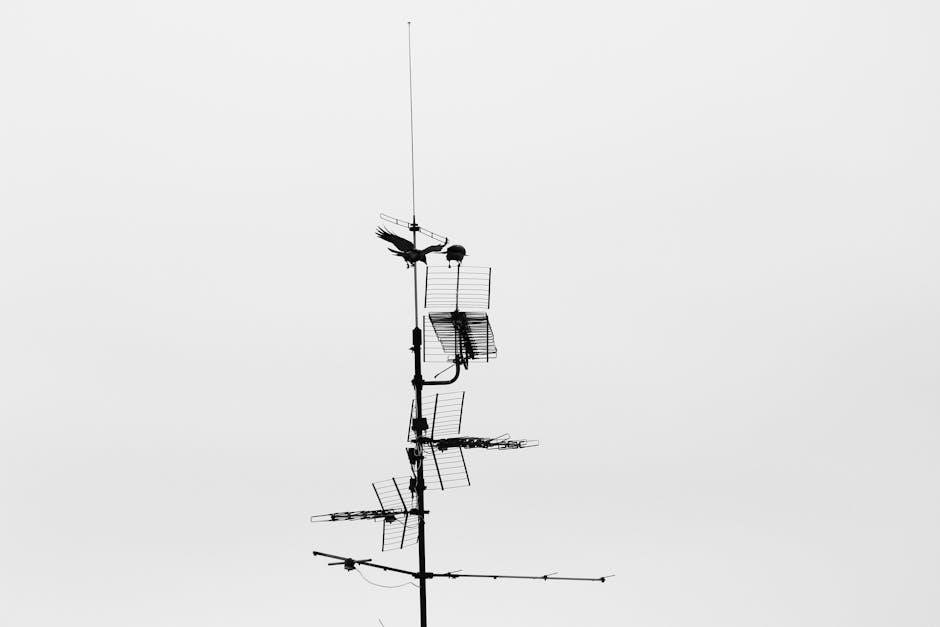
Outdoor antenna installation requires more caution. Prioritize safety by avoiding power lines and ensuring secure mounting. A height of at least four feet above the TV, utilizing the supplied coax cable, is a good starting point. Consider professional installation if you’re uncomfortable working at heights or with electrical systems.
Indoor Antenna Installation
Installing an indoor antenna in Mesa, AZ, is a simple process. Begin by connecting the coaxial cable securely to both the antenna and your television’s antenna input. Position the antenna near a window, ideally facing the general direction of broadcast towers – experimentation is key! Avoid placing it in basements or areas obstructed by metal objects.
Remember, signal strength varies. Try different locations and orientations to maximize reception. A higher position often improves results. Once connected, initiate a channel scan on your TV to discover available channels.
Outdoor Antenna Installation: Safety Precautions
Prioritize safety during outdoor antenna installation in Mesa, AZ. Always disconnect the power to any electrical equipment near the installation site. Avoid working during inclement weather – lightning, high winds, and rain pose significant risks; Use a sturdy ladder and ensure it’s placed on level ground.
Be mindful of power lines! Maintain a safe distance – at least 10 feet – from any overhead wires. If you’re uncomfortable with heights or electrical work, consider hiring a professional installer. Proper grounding is crucial for lightning protection; consult local codes.

Scanning for Channels After Installation
Following antenna installation in Mesa, AZ, a channel scan is essential. Access your TV’s menu and locate the “Channel Scan” or “Auto Program” function. Select this option and allow the TV to search for available over-the-air signals. The scan duration varies, but typically takes 15-30 minutes.
Ensure the antenna is securely connected during the scan. After completion, review the channel list. You may need to rescan periodically, as channel frequencies can change. If desired channels are missing, double-check antenna placement and signal strength.
Troubleshooting Common Reception Issues
Mesa, AZ, viewers often encounter weak signals or interference. For weak signals, reposition the antenna, elevate it higher, or consider an amplifier. Interference, manifesting as pixelation, can stem from nearby electronics or weather. Try relocating the antenna away from potential sources of disruption.
Check coaxial cable connections for tightness and damage. A rescan after adjustments is crucial. If PBS, TBN, or Fox remain elusive, confirm broadcast tower direction and signal strength in your specific location. Remember, terrain and obstructions impact reception.
Weak Signal Strength
Experiencing a weak signal in Mesa, AZ? First, verify all cable connections are secure and undamaged. Elevating your antenna, even a few feet, can dramatically improve reception. Experiment with antenna positioning – small adjustments can make a big difference. Consider an antenna amplifier, but only if truly needed, as they can sometimes introduce noise.
Check for obstructions like buildings or trees blocking the signal path. Utilize online tools like AntennaWeb or TV Fool to confirm optimal tower direction and expected signal strength for your location. A longer coaxial cable may also contribute to signal loss.
Interference and Pixelation
Pixelation or intermittent signal loss in Mesa, AZ? This often indicates interference. Common culprits include other electronic devices, especially those emitting radio frequencies. Try relocating your antenna away from these sources. Check the coaxial cable for damage or kinks, as these can introduce noise.
Atmospheric conditions can also play a role; Severe weather may temporarily disrupt signals. Ensure your antenna is properly grounded to minimize electrical interference. If problems persist, a high-quality coaxial cable and a signal filter might resolve the issue.
Channel Rescan Frequency in Mesa, AZ
Regular channel rescans are crucial for optimal viewing in Mesa, AZ. While not on a fixed schedule, it’s recommended to rescan your TV at least every six months, or whenever significant weather changes occur. Broadcasters occasionally adjust their signals, necessitating rescans to detect new channels or updated program guides.
Furthermore, rescanning is essential after any antenna adjustments or installations. Most TVs have an auto-scan function within their settings menu. Performing a rescan ensures your TV is receiving the most current channel lineup available via over-the-air signals in the Mesa area.
Local Broadcast Tower Locations Serving Mesa, AZ
Mesa, AZ, benefits from several broadcast towers delivering OTA signals. Key locations include South Mountain near Phoenix, serving as a hub for many major networks. Another significant location is Black Mountain, also near Phoenix, contributing to regional coverage. Specific channel transmission originates from these primary sites, impacting signal strength across Mesa.
Understanding tower locations aids antenna aiming. While precise coordinates are readily available online via resources like AntennaWeb and TV Fool, generally, aiming towards the Phoenix metropolitan area will maximize reception for most Mesa residents.
Spanish Language Channels Available via Antenna in Mesa
Mesa, AZ, viewers have access to a variety of Spanish-language channels via over-the-air antenna. Reports indicate a “buncha Spanish channels” are currently receivable, though specific channel numbers fluctuate. Commonly received options include Univision, Telemundo, and Estrella TV, offering news, entertainment, and sports programming.
Signal strength varies based on location and antenna quality. Residents may also find access to additional Spanish-language networks depending on their antenna’s capabilities and proximity to broadcast towers. Regularly rescanning channels ensures optimal reception of available Spanish-language broadcasts.
Missing Channels: PBS, TBN, and Fox
Many Mesa, AZ, residents report difficulty receiving PBS, TBN (Trinity Broadcasting Network), and Fox via antenna. This isn’t uncommon, as these channels often broadcast at lower power or from more distant towers. Terrain obstructions and antenna placement significantly impact reception for these signals.
Fox’s availability can be particularly challenging. PBS and TBN may require a higher-gain antenna or strategic positioning. Signal interference and distance from broadcast sources are primary culprits. Regular channel rescans are crucial, but may not resolve persistent issues with these specific networks.
Reasons for Not Receiving Specific Channels
Several factors contribute to missing channels like PBS, TBN, and Fox in Mesa, AZ. Distance from broadcast towers is a primary reason; weaker signals struggle to reach certain areas. Terrain – buildings, mountains – create obstructions, blocking or weakening signals. Antenna height and placement are critical; a low antenna or poor positioning limits reception.
Coaxial cable quality and length also play a role. Interference from other electronic devices can disrupt signals. Finally, channel power variations mean some networks broadcast with less strength, requiring a more powerful antenna setup for reliable viewing.
Optimizing Antenna Placement for Best Reception
Achieving optimal reception in Mesa, AZ, requires careful antenna placement. Experimenting with position is key – try different locations near windows, and at varying heights. A signal meter is invaluable; it visually displays signal strength, guiding you to the best spot. Remember, even small adjustments can significantly impact reception.
Consider both horizontal and vertical polarization. Outdoor antennas benefit from higher placement, clear of obstructions. Indoor antennas should be tested in multiple rooms. Regularly rescan for channels after each adjustment to ensure the antenna is locking onto available signals.
Experimenting with Antenna Position
Fine-tuning antenna position is crucial for maximizing signal strength in Mesa. Begin by testing various locations near windows, as these offer a clearer path for signals. Slowly rotate the antenna in small increments, observing channel reception after each adjustment. Height matters; even a few feet can make a difference.
Don’t limit testing to one room. Try different areas of your home, noting signal improvements. Remember the current setup has the antenna approximately four feet above the TV. A signal meter provides real-time feedback, simplifying the process and pinpointing optimal placement.
Using a Signal Meter
A signal meter is an invaluable tool for optimizing antenna placement in Mesa, AZ. These devices provide a visual or audible representation of signal strength, eliminating guesswork. Connect the meter between the antenna and your TV, then slowly move and rotate the antenna.
Observe the meter’s readings carefully. The goal is to achieve the highest possible signal strength for desired channels. Note that signal strength isn’t everything; signal quality is equally important. A strong but noisy signal may result in pixelation. Experimenting with position, guided by the meter, will yield the best results.
Coaxial Cable Considerations
The coaxial cable connecting your antenna to the TV significantly impacts signal quality in Mesa, AZ. Longer cable lengths inherently experience signal loss, so use the shortest cable necessary. A supplied cable reaching only four feet, as some Mesa residents experience, may limit optimal antenna positioning.
Cable quality is also crucial. RG6 cable is preferred over older RG59 due to its superior shielding and lower signal loss. Ensure connectors are securely fastened to prevent interference. Investing in a high-quality coaxial cable can dramatically improve reception, especially for distant channels.
Cable Length and Signal Loss
Coaxial cable length directly correlates with signal attenuation, a critical factor for Mesa, AZ viewers. Each foot of cable introduces some signal loss, particularly at higher frequencies used for certain channels. Longer runs necessitate stronger signals from the broadcast towers to overcome this reduction.
A Mesa resident’s four-foot cable limitation highlights this issue. While short, even this length can impact weaker signals. Generally, keeping cable runs under 100 feet is recommended for optimal performance. Consider using a lower-loss cable for longer distances to minimize signal degradation.
Cable Quality
The type of coaxial cable significantly impacts OTA signal reception in Mesa, AZ. RG6 cable is the standard recommendation for modern digital television, offering superior shielding and lower signal loss compared to older RG59 cables.
Higher quality cables feature better shielding against interference – crucial in urban environments like Mesa. Look for cables with a solid copper center conductor and multiple layers of shielding (foil and braid). Cheap, poorly constructed cables can introduce noise and weaken the signal, leading to pixelation or dropped channels.
Antenna Amplifiers: Do You Need One?
Whether you need an antenna amplifier in Mesa, AZ, depends on your distance from broadcast towers and signal strength. If you’re relatively close to the towers and experiencing good signal reception, an amplifier is likely unnecessary and could even introduce noise.
However, if you’re far from the towers or have a weak signal, a preamplifier (mounted near the antenna) can boost the signal before it travels down the cable. Distribution amplifiers are useful if you’re splitting the signal to multiple TVs. Carefully consider your specific situation before investing in an amplifier.
Resources for Mesa, AZ TV Signal Information
For Mesa, AZ residents seeking detailed TV signal information, several online resources are invaluable. AntennaWeb (antennaweb.org) provides a customized channel list based on your exact address, predicting receivable channels and signal strength.
TV Fool (tvfool.com) offers a more technical analysis, displaying a signal map and detailed information about broadcast towers. These tools help determine the optimal antenna type and placement. Utilizing both resources provides a comprehensive understanding of your local OTA TV landscape, aiding in maximizing channel reception.
AntennaWeb
AntennaWeb (antennaweb.org) is a user-friendly resource for Mesa, AZ residents aiming to identify available over-the-air TV channels. Simply enter your zip code to receive a personalized list of predicted channels, categorized by signal strength – strong, moderate, or weak;
This tool also suggests suitable antenna types based on your location and distance from broadcast towers. AntennaWeb’s intuitive interface makes it an excellent starting point for beginners, offering a quick and easy way to assess potential channel reception in your area.
TV Fool
TV Fool (tvfool.com) provides a more detailed and technical analysis of OTA TV signal reception in Mesa, AZ, compared to AntennaWeb. It generates a comprehensive report, including signal strength predictions for numerous channels and detailed maps illustrating broadcast tower locations.
TV Fool utilizes advanced algorithms to account for terrain and obstructions, offering a more accurate assessment of potential reception challenges. While slightly more complex to interpret, the detailed information provided by TV Fool is invaluable for optimizing antenna placement and selecting the appropriate antenna type for your specific location.
Future of OTA TV in Mesa, AZ
The future of Over-the-Air (OTA) television in Mesa, AZ, appears stable, though evolving. While cord-cutting trends continue, OTA remains a viable, free alternative to cable and satellite. The ongoing ATSC 3.0 rollout promises improved picture quality and interactive features, potentially revitalizing interest in antennas.
However, potential spectrum repackaging and shifts in broadcast priorities could impact channel availability; Mesa residents should remain vigilant, periodically rescanning for channels and utilizing resources like TV Fool to adapt to any changes. The demand for local channels will likely sustain OTA’s relevance.